
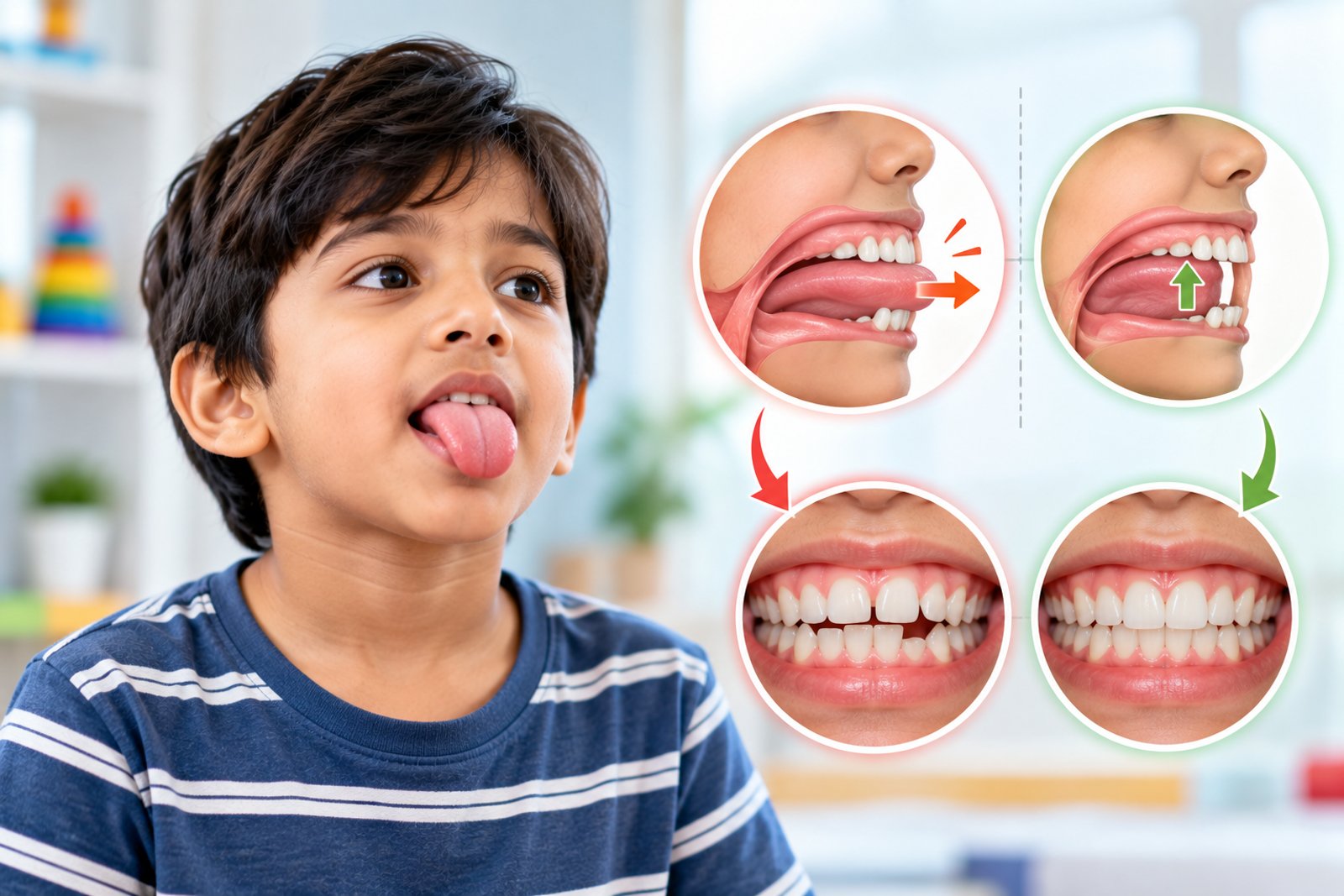
Tongue thrusting habit is a common oral issue that can affect both children and adults. This habit happens when the tongue pushes against or between the teeth during swallowing, speaking, or even at rest. As a result, tongue thrusting habit can change the way teeth grow and line up. Many people wonder about the effects of tongue thrusting on teeth and how to stop it. Understanding this habit is important for good dental health and a healthy smile.
What Is Tongue Thrusting Habit?
Tongue thrusting is when the tongue moves forward against the teeth instead of staying at the roof of the mouth. Usually, the tongue should press gently against the roof when you swallow. However, with tongue thrusting, the tongue presses on the front teeth or even slips between them. Over time, this repeated pressure can lead to changes in teeth alignment. For many, tongue thrusting starts in childhood but can continue into adulthood if not corrected.
Common Symptoms of Tongue Thrusting
Many people do not notice tongue thrusting right away. However, certain signs can help spot this habit early. For example, you might see:
Because these symptoms can affect daily life, it is important to watch for them, especially in children. Early detection helps with correcting tongue thrusting in children and adults alike.
Causes and Risk Factors
Several factors can lead to tongue thrusting habit. For instance, some children develop this habit as a result of:
In addition, certain medical conditions or muscle issues can increase the risk. Understanding these causes helps in planning the right treatment for tongue thrusting habit.
How Tongue Thrusting Affects Teeth Alignment
Tongue thrusting puts steady pressure on the front teeth. Over time, this pressure can push teeth forward or apart. As a result, children and adults may develop an open bite or gaps between teeth. In some cases, the upper and lower teeth do not meet properly, which can affect chewing and speech. According to dental studies published in peer-reviewed journals, untreated tongue thrusting can also slow down orthodontic treatment. Therefore, correcting tongue thrusting in children is important for healthy teeth alignment and overall dental health.
Diagnosis and Evaluation
Early diagnosis of tongue thrusting habit is key for better results. Dentists or orthodontists usually check for signs during a dental exam. They may watch how a person swallows or speaks. Sometimes, special tests or X-rays help see the effects of tongue thrusting on teeth. In many cities, you can search for “tongue thrusting treatment near me” to find a dental specialist. Early evaluation helps prevent long-term dental problems and supports healthy oral habits.
Treatment Options for Tongue Thrusting Habit
Treatment depends on the age of the person and the severity of the habit. For children, early intervention can be very effective. Common treatment options include:
Because every case is different, a dental professional can recommend the best plan. In addition, regular follow-ups help track progress and prevent relapse.
Tips for Prevention and Healthy Oral Habits
Preventing tongue thrusting habit starts with good oral care and healthy habits. Here are some helpful tips:
With these steps, families can help reduce the risk of tongue thrusting and its effects on teeth alignment. For more guidance, dental professionals in your area can provide advice on oral habits and dental health.